Digitalising the Claim Submission Flow
How a paper-based, manually intensive claims process was redesigned into a fully digital workflow — reducing turnaround time by 80% and freeing assessors to focus on high-value decisions.
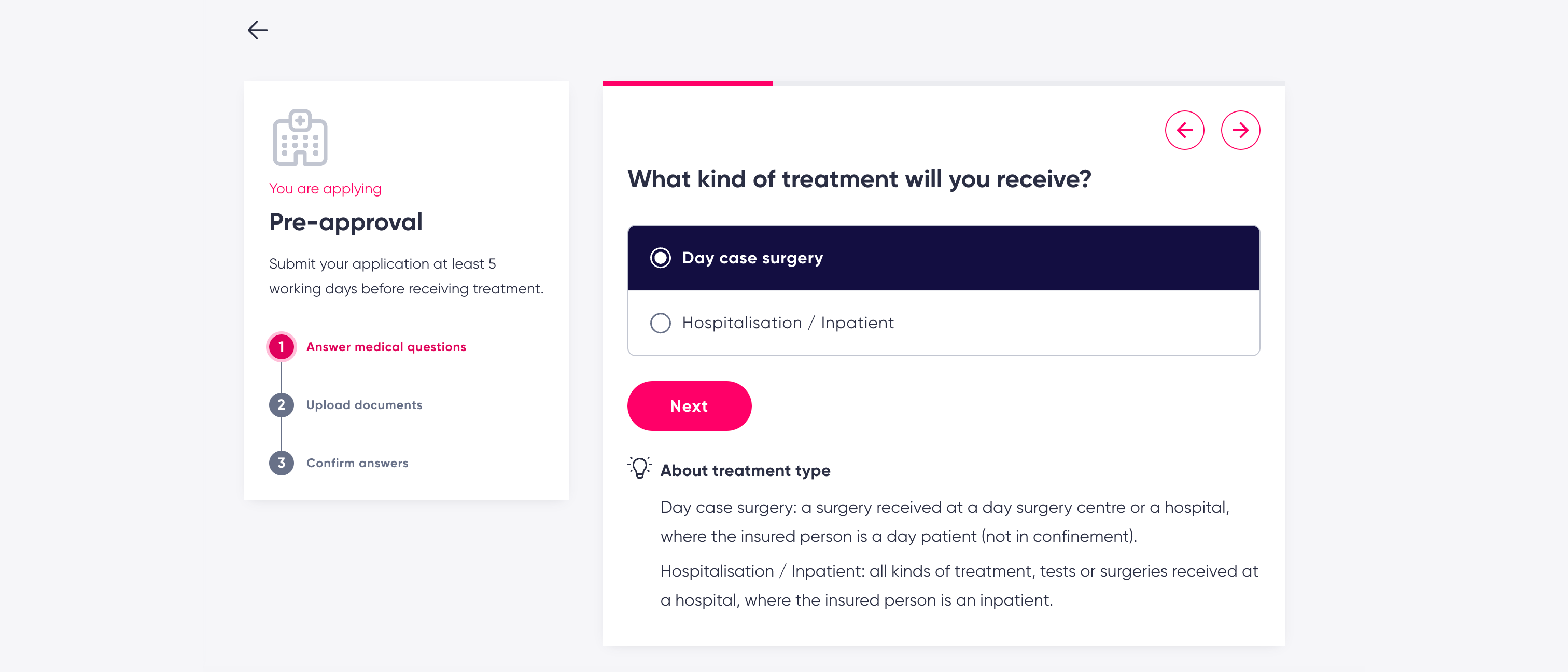
The problem worth solving
The insurance company's pre-approval claim submission process was entirely paper-based. Policyholders submitted physical documents, which were then manually reviewed, transcribed, and processed by the claims team — creating a significant data-entry burden and introducing delays at every handoff point. As claim volumes grew, the process couldn't scale. Assessors were spending the majority of their time on administrative tasks rather than evaluating claims. Processing backlogs were extending turnaround times from days to weeks, frustrating policyholders and increasing support queries.
What I did
The first step was understanding the existing process in granular detail — not from a systems perspective, but from the perspective of the people living inside it daily.
- User journey mapping: Mapped the end-to-end claim submission user journey — documenting every handoff, friction point, and bottleneck in the existing paper-based process.
- Friction point identification: Identified where manual data entry created the highest delay and assessor burden, scoping the digital solution around the highest-impact interventions.
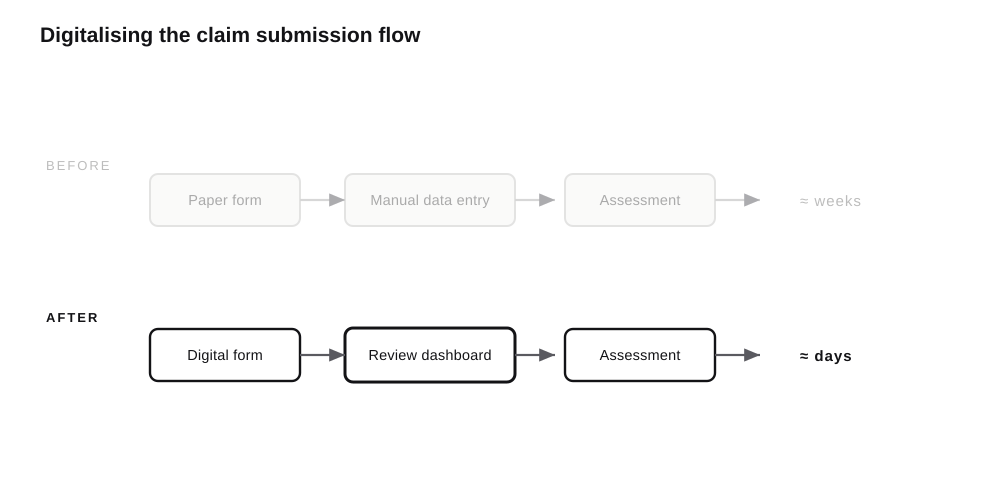
- Digital dashboard design: Designed a digital claim review dashboard tailored to the Operations team's workflow — enabling assessors to review, process, and action submissions without manual transcription.
- Operations team transition: Managed the full transition for the Operations team — coordinating training, phased rollout, and ongoing feedback loops to validate the new workflow in production.
The outcome
Claim turnaround time dropped by 80% — processing timelines that previously extended to several weeks were reduced to days following the digital dashboard deployment. Assessors reported significantly reduced administrative overhead, freeing capacity for higher-value work. Beyond the headline metric, the digitisation created a foundation for further process improvements — claim data was now structured and queryable, enabling reporting and trend analysis that was previously impossible with a paper-based system.